When the weather is warm, all we want to do is go outdoors. And as much as we love enjoying tea in the comfort of a home, there is plenty of time for that during the chilly winters. Summer, on the other hand, is the perfect time to enjoy tea outdoors, with fresh greenery all around and the sounds of mountain streams...
Although packing for some quality gongfu cha time outdoors can be intimidating. What to bring? How do we make sure the teaware doesn't break? What about the water? What if the tea gets crushed?
Based in New York City, we are somewhat amateurs when it comes to the outdoors. We don’t have any fancy equipment or tea bags made specifically for this purpose. But we can share some tips we’ve learned along the way that might come in handy for amateurs like us.
What Teaware Should I Bring Hiking?
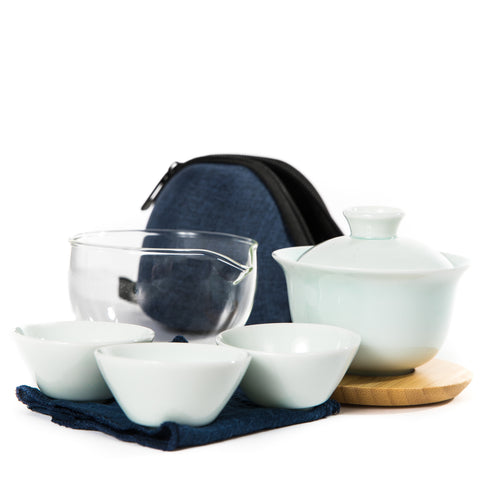
When you bring teaware, make sure it is sturdy and not easy to break. You probably don’t want to carry too much extra weight either. We prefer bringing a gaiwan over a teapot.
There are two reasons for this:
-
The gaiwan is sturdier. It doesn’t have a spout that can possibly break.
-
The gaiwan has enough space to stack two cups inside of it.
This way you are only carrying your gaiwan and already have everything you need, almost. We like to bring our gaiwan with the cups stacked inside of it. The next step is making sure it's protected so that it doesn’t break. For this purpose, we like to carefully wrap it in a kitchen cloth or Japanese tenugui. You can wrap it in anything else you feel comfortable: a scarf, tee shirt, etc.
How about the water?
If you aren’t planning on having a campfire outside, where you can boil the water on the spot, we recommend bringing a thermos with boiled water. The size will vary depending on the number of people hiking with you and how many times you plan to brew the tea (all of our teas brew from 5-10+ times). For 2 people, a 16oz thermos will last for about 3-5 brews. An ideal option would be at least a 25oz thermos.
Each tea varies in the water temperature it requires for brewing. Although most thermoses keep the water hot for at least 6 hours, it still gradually becomes cooler. For this purpose, we always fill it with boiling water. This way, even if it becomes a little cooler, it will be the right temperature for many, if not most, of our teas.
Another option is to bring a jug of water and a portable gas stove and kettle for camping.
Which Teas Should I Bring Camping?
Understandably, everyone has their own tea preferences. And some teas might seem to us extra tasty outdoors.
Something about the fresh air and smell of the trees and flowers just seems to completely transform the tea. Sometimes it’s hard to believe it is the same tea we have been drinking indoors, there are just so many factors that play a role in the taste and overall experience.
Here are some factors that play a role in the tea you choose to bring:
-
Are the tea leaves fragile and easy to get crushed?
This is not a huge problem, but many would surely prefer their tea leaves not to get crushed. Fragile tea leaves generally tend to also take up a lot of space.
For this reason, we would recommend bringing a compact tea like a pu-erh, rolled oolong, or a compressed white tea. Other kinds of white tea have very fragile leaves that can easily get crushed.
-
What kind of energy does the tea have?
Everyone has their own sensitivities when it comes to the energy of tea (caffeine). We like to bring teas that give us more energy for our hike or time outdoors.

Some of our favorite teas for camping and outdoors:
-
These dragon pearls come from an organic-certified garden in Mangpan, in Lincang – one of the three classical pu-erh regions of Yunnan. It will fill your cup with a rich, bright orchid aroma. The taste carries baked green apple and honey, with a floral note. Later steepings shift toward green plum and orchid, sharper and brighter than the opening. A small bitterness rides the front of the palate but fades almost immediately into sweetness. Hui Gan (回甘 — "returning sweetness") follows fast, and a clear coolness opens in the throat – hallmarks of good Lincang material.
One pearl, one session. Tuck a few into your backpack, and you are set for the trip.
-
30 years aged Jin Cha Ripe Pu-erh
This mushroom-shaped (紧茶 – Jin Cha) shou Pu-erh is produced by the well-known Xiaguan Tea Factory (下关茶厂) in Dali City, Yunnan. This famous tea factory has been producing tea since 1941 and is especially renowned for its tightly compressed tea, including its signature Tuo Cha and Jin Cha shapes. This Jin Cha is made of aged leaves from 1995, masterfully blended with a touch of younger tea, and pressed in 2019.
-
"Frozen Summit" Dong Ding Oolong Tea
When sipping this Taiwanese tea, enjoy the sweet and fruity taste of the lightly peach-colored brew. A clear fragrance with overflowing osmanthus notes will mark a smooth entrance for this tea experience. The flavor will further transform, revealing the warming taste of freshly baked oatmeal cookies, nutty nuances, and sweet flowers going down the throat, and returning as a pleasant finish that can last for hours.
These tips are not limited to hiking; they also work for parks, the beach, and anywhere else!