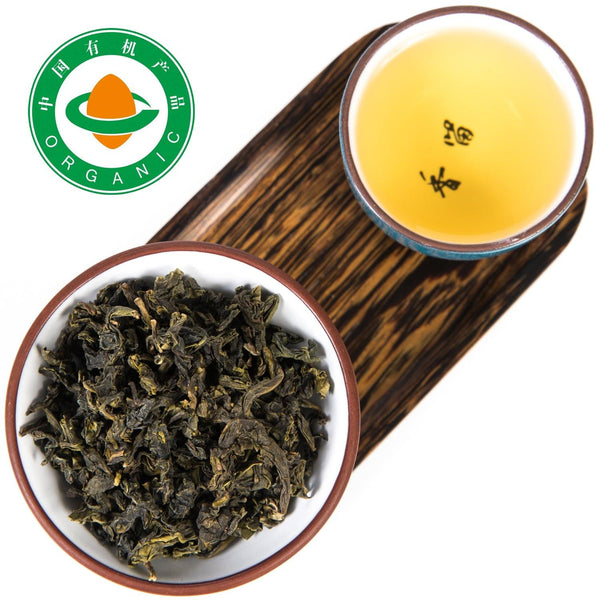
Chinese tea (中国茶 – Zhongguo Cha) spans six categories – Green, White, Yellow, Oolong, Red (what we, in the West, call Black), and Dark (Pu-erh) – produced across dozens of provinces, from the high-mountain ancient tea gardens of Yunnan and Sichuan to the coastal hills of Fujian and Zhejiang. Each province has its own cultivars, processing traditions, and teas with centuries of history behind them.
The ten teas below are among the most celebrated in Chinese tea culture. Some of these teas were once tribute gifts for emperors; many have earned international recognition, and serious tea drinkers return to these teas again and again. They are not necessarily the best teas in China (especially since taste is subjective), but they rightfully represent the best of what Chinese tea has to offer.
Tea-drinking practices evolved over centuries, with significant developments during the Tang and Song Dynasties. Tea, in terms of shape and processing as we know it today, started emerging during the late Song and early Yuan dynasties, around the 12th–13th centuries. Before then, tea was brewed in a whole other manner. Tea leaves were ground into powder and whisked with hot water – a practice somewhat similar to Japanese matcha, which actually evolved from Song Dynasty tea preparation. In the distant past, this also involved the addition of other herbs and spices that had medicinal properties. The idea of a "Top Ten Teas of China" is a modern concept that has evolved through many unofficial versions, often based on teas once favored by emperors or scholars.

Drinking powdered tea became immensely popular during the Song Dynasty (960–1279). During this time, tea became a significant part of everyday life. Exceptional tea was gifted as a tribute.
It wasn't until the Yuan Dynasty (1279-1368) that people started oxidizing and brewing the tea leaves as we do today. By that time, powdered tea had receded, and loose-leaf tea had taken its place.
The Ten Most Famous Chinese Teas
The list below draws on the teas that appear most consistently across Chinese tea history – teas that were offered as imperial tribute, that have shaped entire regional traditions, or that serious collectors and tea practitioners return to as benchmarks. The 1915 Panama World Expo brought several of these teas to international attention for the first time; others have only gained recognition more recently, as interest in pu-erh and single-origin Chinese tea has grown globally. You will notice that green teas are well-represented – China has been producing and refining green tea longer than any other category, and several of its most celebrated examples remain unsurpassed.
-
"Dragon Well" Xihu Long Jing Green Tea
Dragon Well tea also holds the not-so-humble nickname "China's Most Famous Tea." While there are a couple of Long Jing varieties based on their growing and production areas, only Xihu (West Lake) Long Jing earns a spot on the top ten list.
Those who have tried Longjing green tea can't help but fall in love with it. It's truly an exceptional green tea without a rival. West Lake Dragon Well Green Tea is often served to VIP guests and heads of state visiting China. It's produced in the West Lake area of Hangzhou, the capital of Zhejiang province.Long Jing has held the honor of being chosen as a tribute to the Qing Dynasty by Emperor Qian Long. Read more -
"Sweet Dew" Meng Ding Gan Lu Green Tea
Meng Ding Mountain (蒙顶山) in Ya'an, Sichuan province, is widely considered the oldest documented site of cultivated tea in China. Historical records trace deliberate tea cultivation here to the Western Han dynasty, over two thousand years ago. During the Tang dynasty, Meng Ding tea was selected as an imperial tribute tea, a status it held continuously through successive dynasties for over a millennium.
Meng Ding Gan Lu – "Sweet Dew" – is the most prized of the Meng Ding teas. Made from single buds harvested before Qingming (清明 – the first days of April), it is handmade in the traditional style: the leaves are pan-fired, hand-shaped, and dried at low temperature. It culminates in a tea of exceptional delicacy – fresh, sweet, slightly floral, with a smooth, almost silky mouthfeel and almost no astringency.

Tea Master Yao making Meng Ding Gan Lu Green Tea
-
"Yellow Mountain" Huang Shan Mao Feng Green Tea
Huang Shan Mao Feng originated during the Qing Dynasty. This exceptional green tea is grown at high altitudes in the Huangshan Mountains of Anhui Province, China. Huang Shan Mao Feng tea bushes are unique because they grow wildly, with no two tea bushes being the same. Huang Shan is renowned for its sweet and mellow taste, somewhat resembling Long Jing.
-
"Iceland" Bing Dao Raw Pu-erh
Bing Dao is a village in Lincang prefecture, Yunnan, and the name alone is enough to raise eyebrows among serious pu-erh collectors. The village sits at around 1,900 meters, surrounded by ancient Yunnan large-leaf tea trees, some of which are centuries old. Bing Dao teas command some of the highest prices of any pu-erh in the world – authentic old-tree material from Bing Dao village itself (冰岛老寨 – Bing Dao Lao Zhai) can reach tens of thousands of yuan per kilogram at the source.
The name means "Iceland" – not for the country, but for the distinctive cooling sweetness the tea leaves in the throat after drinking. This characteristic, called Bing Dao Gan (冰岛甘), is one of the most prized sensations in all of pu-erh: a wave of sweetness and a cooling, almost mentholated finish that lingers long after the cup is empty. Young raw Bing Dao is bright and clean. With age, the taste deepens, and the sweetness intensifies.
-
Lao Ban Zhang Raw Pu-erh
If Bing Dao is famous for sweetness, Lao Ban Zhang is famous for power. The village of Lao Ban Zhang sits in the Bulang Mountains of Menghai county, Xishuangbanna, Yunnan – a different region, a different terroir, and an entirely different character from Bing Dao. Lao Ban Zhang pu-erh is known for its intensity: a pronounced, bold bitterness on entry, strong Cha Qi (茶气 – Tea Energy), and a powerful Hui Gan (回甘 – Returning Sweetness) that rises quickly and fills the mouth. Experienced drinkers describe the combination of bitterness, energy, and sweetness as one of the most complete sensory experiences in pu-erh.
Just like Bing Dao, Lao Ban Zhang is one of the most counterfeited teas in China. Its reputation drives prices to headspinning heights – genuine Lao Ban Zhang sells for hundreds of dollars per hundred grams, and the market is flooded with teas labeled Lao Ban Zhang that have little or no connection to the village. Buying from a trusted source is essential.
-
“Monkey King” Taiping Hou Kui Green Tea
Taiping Hou Kui comes from Taiping county (now Huangshan city) in Anhui province, and it is immediately recognizable: the leaves are exceptionally large, up to 15cm, flat-pressed into a distinctive elongated shape with a cross-hatched pattern from the pressing screens, with the bud enclosed between two leaves. No other Chinese tea looks quite like it.
Brought to life in the early 20th century, Taiping Hou Kui quickly gained prestige and has appeared on nearly every version of China's most celebrated tea lists since. Its taste is quite distinctive: orchid and magnolia aromas, a smooth, exceptionally mellow character, and soft sweetness that persists for many steeps. High-grade Hou Kui is harvested in a very narrow window in early spring, each leaf individually selected and hand-pressed. The combination of unusual appearance, demanding production, and refined flavor has made it one of China's most admired green teas.

Tai Ping Hou Kui Green Tea
-
"Iron Goddess" Anxi Tie Guan Yin Oolong Tea
Anxi Tie Guan Yin is a world-renowned, delicious, and mellow oolong tea hailing from Anxi, Fujian province. Anxi Tie Guan Yin originated during the Qing Dynasty and has a long, rich history.
Compared to other Chinese teas, Tie Guan Yin's production process is the most complicated, and the heavy tossing (yaoqing) is considered the most crucial step. It is a key stage in forming the Guan Yin Yun (观音韵) and the distinctive floral fragrance of Tie Guan Yin, which makes it unique.
Traditional Tie Guan Yin has a higher degree of oxidation than most other oolong teas. Its mellow, soft, and long-lasting lingering taste will make you crave more. Read more.
-
"Da Hong Pao" Yancha Wuyi Rock Tea
Wuyi Rock Teas, also known as yancha, are delicious oolong teas. While Da Hong Pao is the most well-known throughout the world, there are a few other yancha varieties that might win over your heart. Either way, they are all worth tasting. What makes them exceptional is the "yan yun," loosely translated as "rock rhyme" – mineral, well-balanced, graceful. Read more.

-
Dian Hong Black Tea
Dian Hong (滇红 – Yunnan Red Tea) is one of China's most celebrated black teas. Where green teas are delicate, and Yancha is mineral and roasted, Dian Hong is bold, malty, and unmistakably rich. It comes from Yunnan province – the same large-leaf assamica trees that produce pu-erh – and the cultivar's naturally higher content of compounds gives Dian Hong a thick, malty body with notes of honey, cocoa, and dried fruit that no Indian or Sri Lankan black tea quite replicates.
First produced in 1938 by tea industry pioneer Feng Shaoqiu, Dian Hong was developed partly as a commercial product for export to Europe, and quickly earned an international reputation. Today, it spans a range of grades from everyday loose leaf to prized single-bud productions like Jin Ya (金芽 – Golden Buds), where tips are covered in fine golden fuzz.
-
Lushan Yun Wu Clouds and Mist Green Tea
Moistened by the high mountain clouds and mist, Lu Shan Yun Wu is one of the most graceful green teas. This tea is characterized by a rich aroma and mellow, long-lasting nutty flavor. Lu Shan Yun Wu leaves are rolled into small spirals during a unique process: the tea leaves are placed in a rounded bamboo basket and then rolled by hand.
Many of the teas on this list are available in our collection. Browse our Chinese Loose Leaf Teas Collection