"The flourishing of tea is an emblem of a peaceful and prosperous age."
— Emperor Huizong
In our previous blog post on Tie Guan Yin, we already discussed the brief history and processing method of this delicious oolong tea. Tie Guan Yin remains a worldwide favorite amongst tea enthusiasts. It’s ranked among the top ten of the best Chinese teas, the top three best Taiwanese teas, and is indeed in most, if not all, of the best oolong categories. Let’s take a more in-depth look at why this is so.
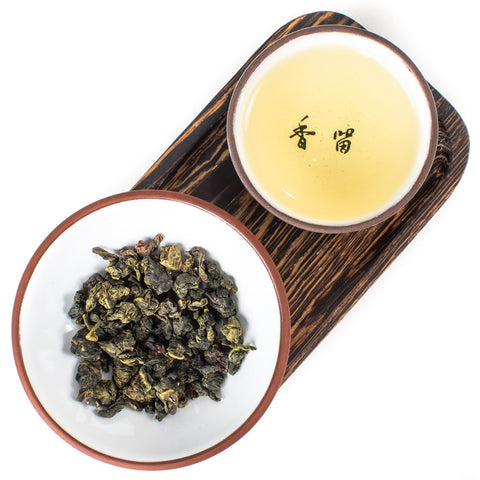
Briefly On The History Of Tie Guan Yin Oolong Tea
Tieguanyin is also known as the Iron Goddess of Mercy and the Iron Bodhisattva of Mercy. It originated in Anxi, southern Fujian province, during the Qing Dynasty (1644 - 1911). Anxi is an ancient tea production area. Tea farming in Anxi dates back over a thousand years to the Tang and Song Dynasties. Ancient tea trees are still occasionally discovered in the region, with some estimated to be around 1,000 years old. These, however, are wild trees showcasing the region’s rich tea history. Nowadays, they are not used for tea production.
In Taiwan, Tie Guan Yin is in the top three most popular teas. One can’t make more than a few steps without finding a TGY vendor. The tea came to Taiwan with early immigrants from Fujian. While much of Taiwan's modern high-mountain tea production has moved to the central mountains, the traditional heartland for authentic, heavily roasted Taiwanese Tie Guan Yin remains in the North, specifically in the Muzha (木栅) district of Taipei.
How Can We Tell If The Tie Guan Yin Is Good Quality?
While Tie Guan Yin can differ significantly in processing methods and final taste and aroma, there are still a few qualities that should remain the same for any TGY you buy. Tie Guan Yin is known for its robust, heavy leaves. It is not as gentle as many other tea varieties.
Tie Guan Yin tea leaves should be whole and thick. When dry, the tightly rolled, dense nuggets should resemble a "dragonfly head" due to their heavy, compact shape. When brewed and unfurled, the leaves should feel thick, smooth, and resilient, often compared to satin.
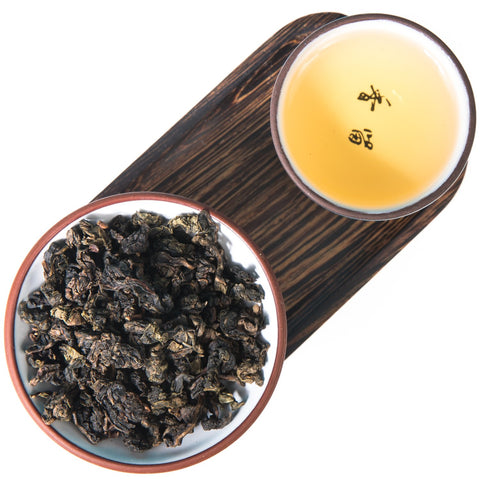
Taiwanese Tie Guan Yin (Medium Roast)
Traditionally, the leaves were prized for a "three parts red, seven parts green" (三红七绿 – San Hong Qi Lu) appearance. However, the vast majority of modern Anxi Tie Guan Yin on the market is in the Qing Xiang (清香) style, in which the red edges are removed to create a pure, vibrant emerald-green leaf. Taiwanese Tie Guan Yin, being heavily roasted, will appear dark brownish-green.
The color of the brew depends entirely on the style. Modern Anxi TGY brews a pale, bright yellowish-green, while traditional, heavier roasted Taiwanese styles yield a warming golden or deep amber liquor. No matter the roast level, there is always a noticeable long-lasting orchid scent.
In Anxi and Taiwan, where this tea is prevalent, Tie Guan Yin is a prime choice for dinner pairings. Its robust qualities help to balance some heavier meals, refreshing the palate. Many believe that TGY helps with digestion.
Tie Guan Yin tea tastes exceptional when brewed in both the Gong Fu and Western styles. We particularly recommend using aroma cups (闻香杯 – Wen Xiang Bei) for your TGY experience.