A young monk once asked the wise Tea Master Lao Cha:
– Sifu, how come such honey-sweet, wonderfully aromatic tea that smells like gardenia flowers is called “Duck Shit Oolong”???
– Sometimes no good things bear nice names, sometimes things are vice versa. Look deeper and beyond the surface if you want to find real treasure.
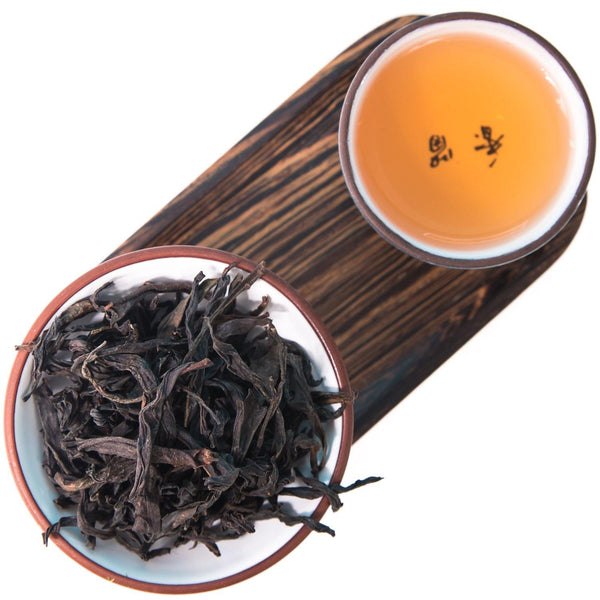
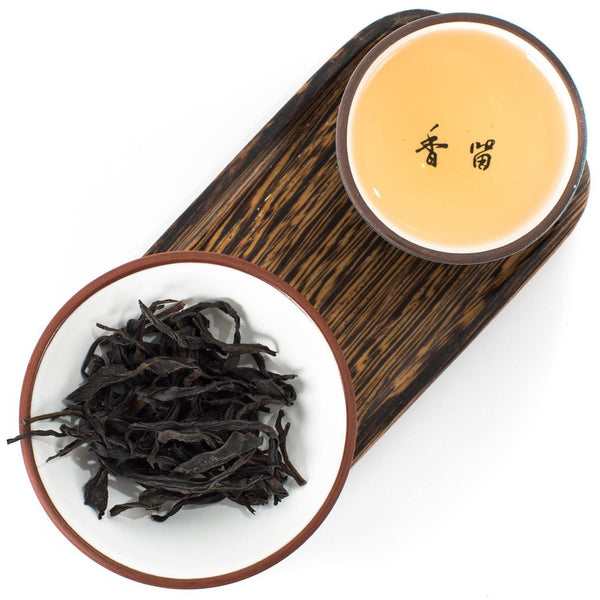
Duck Shit Oolong, known in Chinese as Ya Shi Xiang (鸭屎香 – Duck Shit Aroma), is a Phoenix Dan Cong Oolong (Fenghuang Dancong) from the Phoenix Mountains of Guangdong province, China. Despite the name, it is one of the most fragrant and widely sought-after oolongs in the world: honey-sweet, intensely floral, with a characteristic gardenia-like aroma and a long, clean finish. The name was invented by a farmer to protect his prized tea trees. And it stuck.
The Phoenix Mountains of China’s southeastern Guangdong province are where one might find Duck Shit Oolong. Year-round, these mountains are surrounded by fog and rain, creating ideal moist conditions that promote the growth of this special tea.
The mountain continues to attract tourists, not only for its scenic views but also of the intriguing Phoenix Oolong Tea.

What Makes Dan Cong Oolong Tea Special?
"Dan Cong" means "single bush”. A Dan Cong “garden” differs from a typical tea garden. Most tea gardens consist of short tea bushes planted in rows and look almost identical to one another. What makes Dan Cong tea bushes special is their wild nature. Furthermore, these "bushes" are more like trees, being much taller than the typical tea bush, sometimes reaching 16 ft in height! A Dan Cong Oolong tea garden looks more like the original tea gardens of many centuries ago and is a sight of itself.
Ya Shi Xiang (Duck Shit Aroma) Oolong is a variety of Dan Cong Oolongs. DanCong, literally translated as "single bush", is a special group of oolong tea varieties, cultivated only in the Phoenix Mountains. The most famous Dan Cong Oolong varieties are classified by aroma type.
Some well-known varieties of Dan Cong Oolong Tea are:
-
Mi Lan Xiang – honey orchid fragrance
-
Ye Lai Xiang – night-blooming floral fragrance
-
Yu Lan Xiang – magnolia fragrance
-
Xing Ren Xiang – almond fragrance
Although labeled "Duck Shit Aroma Oolong," this tea is exceptionally fragrant and sweet.
These qualities come from the mountain’s exceptional soil, which is perfect for nourishing the ancient tea trees, some of which are centuries old.
The Story Behind the Name: Duck Shit Oolong Tea
The tale of Duck Shit Oolong is a mix of folklore and modern-day marketing, telling the appealing story about how special this tea is. In fact, so special that farmers would spread lies about their precious tea so that others wouldn’t be tempted to steal it.
The legend tells of a farmer, Mr. Wei, who cultivated this tea in the distinct yellow-brown soil of Ping Keng Tou village. To prevent theft of his superior plants, he claimed the soil's color and fertility were due to massive amounts of duck manure, scaring off disgusted rivals.
For better or for worse, these lies may not have worked as well as the farmers hoped. Soon enough, word about the aromatic Dan Cong Oolong that grows from duck shit spread far and wide, prompting widespread interest in this special tea that leaves a pleasant, lingering honey-sweetness. In fact, what was meant to serve as a repulsive name turned out so popular that when Ya Shi Xiang was renamed by the government officials to Yin Hua Xiang (银花香 – "silver flower fragrance", often translated as "honeysuckle aroma"), the majority of Duck Shit Aroma fans simply refused to adopt the new name and firmly stuck with its original name!

Duck Shit Oolong Tea Processing
Compared to other DanCong Oolong varieties, Ya Shi Xiang tea leaves are thicker and larger, yet softer.
After the leaves are harvested, they undergo a 6-step process:
-
Solar Withering (晒青 – Shai Qing) – fresh leaves are spread in sunlight to reduce moisture and soften the leaf
-
Cooling (晾青 – Liang Qing) – leaves moved indoors to cool and rest; alternates with #3 – Zuo Qing
-
Shaking/tossing (做青 – Zuo Qing) – bruising the leaf edges to initiate partial oxidation
-
"Kill Green" (杀青 – Sha Qing) – high-heat step to halt oxidation at the desired level
-
Rolling (揉捻 – Rou Nian) – shapes the leaf and releases natural oils
-
Drying (烘焙 – Hong Bei) – final drying to lock in aroma and remove remaining moisture
Due to the extent of oxidation, the leaves yield long, curly, brownish-golden tea leaves.
How to Brew Phoenix Mountain Oolong
When brewing this special oolong, we recommend using a porcelain gaiwan or Chaozhou teapot and aroma cups. This way ensures that the full taste and aroma are extracted from this reputable tea.
After the first steep, Phoenix Dan Cong will taste incredibly fresh and sweet, with a light gardenia aroma. With the second infusion, the scent and sweetness become more prominent, stimulating a pleasant mouth-watering response. Finally, at the third infusion, the taste is mellow and full, with a long-lasting aftertaste.