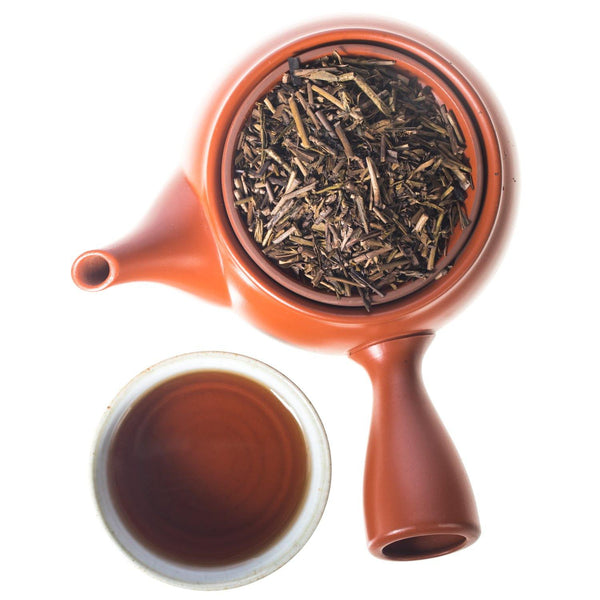
What Is Hojicha?
Hojicha (ほうじ茶 – 焙じ茶, "roasted tea") is a Japanese green tea distinguished by one additional step: roasting. After the initial processing of the green tea base, it is roasted at high heat, which turns the leaf from green to reddish-brown, eliminates most of the grassy and astringent compounds, and produces the characteristic warm, toasty aroma that makes hojicha one of Japan's most beloved everyday teas.
Most hojicha is made from kukicha (茎茶 – stem tea): the stems, stalks, and twigs separated from the leaf during sencha or gyokuro production. Because stems accumulate far less caffeine than leaves and buds, hojicha is one of the lowest-caffeine teas from Camellia sinensis, making it suitable for anyone who wants a warming tea in the evening without the stimulation, and even for children. Some hojicha is made from bancha (番茶) or even sencha as the leaf base, but the kukicha version is the most common and the lowest in caffeine.

Hojicha is popular with meals in Japan
History of Hojicha
Hojicha green tea production didn't start until well into the 20th century, 1920 to be exact.
Tea first came to Japan long before then, during the Nara Period (AD 710 - 794). It was a well-established drink among Buddhist monks and nobles thanks to the numerous health benefits of green tea and its balanced caffeine content, which helped keep monks awake but not overly energized during long hours of meditation.
By the Edo period (1603 - 1868), Japanese tea culture was already booming.
In 1920, a Kyoto tea merchant found himself with a stock of bancha he could not sell. Rather than discard it, he roasted the leaves over charcoal – and in doing so, created something new: a tea with a warm, toasty aroma and a smooth, mellow flavor unlike anything on the market.
After its invention in Kyoto, the roasted tea soon spread across all of Japan. Not only was it a great way of practicing mottainai philosophy, but the pleasant smell of roasting tea was a wonderful way to invite people into your tea shop.
Today, we can choose from many different varieties of Hojicha made from bancha, sencha, and kukicha. The tea is equally loved both hot and iced, as a latte, or even in desserts.
Although most Hojicha is made from bancha (the harvest that comes from the leaves and stems not used during sencha harvest), our Hojicha is made from kukicha (twigs and some leaves). It is one of our favorite teas and also an excellent substitute for coffee!

How Does Hojicha Taste?
The high-temperature roasting process eliminates most of the tannins in the tea – the compounds responsible for astringency in green tea, which is why hojicha has none of the bitterness typical of sencha or gyokuro. The low caffeine content is primarily due to the kukicha base: stems and stalks contain far less caffeine than leaves and buds. As a result, we get a comforting, sweet, genuinely low-caffeine tea.
The taste is described as nutty, caramel-like, slightly earthy, or resembling candied chestnuts.
Although Hojicha is a common, everyday type of tea in Japan, its soothing, well-rounded taste is bound to have you in love with it from the first sip! Which is one of the reasons it's consumed as much as it is — a kyusu of brewed Hojicha can easily be shared with the whole family, no matter the age!
How to Brew Hojicha
Hojicha is brewed similarly to other Japanese teas, but even easier!
Thanks to the roast, Hojicha is forgiving of high temperatures. So you can easily brew Hojicha even without having a proper tea kettle around.
Steps for brewing a tasty cup of Hojicha roasted green tea:
- Use a Kyusu (or brewing vessel of choice)
- Measure 1g of tea per 2oz/60ml of water
- Fill with water 200℉ / 95℃ water (just below boiling)
- Brew for 2min + 30sec for each subsequent infusion
- Enjoy!