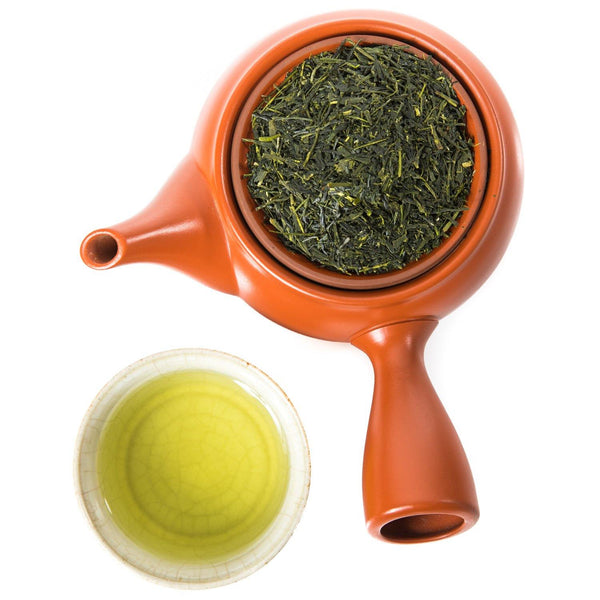
If you are a fan of Japanese teas, you’ve probably heard of, tried, or been recommended to try Gyokuro. So what makes Gyokuro so special?
I must make a confession: incidentally, Gyokuro was the first Japanese tea I’ve ever tried. This was many years back. I went into a tea shop, asked for the staff’s recommendation, and asked whether I could smell a few different varieties.
After getting a whiff of Gyokuro, I had to look no further for what tea I would be trying that day...
What Is Gyokuro?

Gyokuro is a shaded green tea cultivated in Japan. Gyokuro is shaded for approximately three weeks under special straw mats. In Japan, everyone knows Gyokuro for its exquisite taste. It is indeed a luxury product that is often reserved for special occasions.
What Is The Difference Between Sencha and Gyokuro?
The most significant difference from sencha is that a few weeks prior to harvest, farmers shade the tea bushes for Gyokuro. Due to a sudden decrease in solar energy, the plant is forced to obtain the nutrients it needs for survival through its roots. And because of the reduced photosynthesis, the plant cannot convert L-theanine into catechins (the astringent polyphenols responsible for bitterness). L-theanine accumulates, giving gyokuro its characteristic deep sweetness and umami. Caffeine levels remain high – gyokuro typically contains more caffeine than sencha, but the abundant L-theanine moderates the stimulation, producing a calmer, more focused alertness. Compared to Sencha, Gyokuro is much sweeter, savory, less sharp, and void of bitterness.
What Are The Health Benefits Of Drinking Gyokuro?
Gyokuro has health benefits similar to those of other types of loose-leaf teas. However, thanks to its growing and processing methods, the finished product contains a considerably higher amount of L-theanine – an amino acid that promotes a state of "calm focus" by boosting alpha brain waves and enhancing calming neurotransmitters (GABA, dopamine, serotonin). It also contains a slightly higher percentage of caffeine than sencha. Overall, drinking Gyokuro will leave you feeling uplifted, refreshed, and energized.

How To Brew Gyokuro:
To brew Gyokuro, you will need:
- Ideally, a kyusu teapot (or any other brewing vessel of choice)
- 1 gram of gyokuro tea leaves per 30 ml of quality water heated to 135-145℉ (55-65℃)
The first steep is 2 minutes, followed by 30 seconds for further infusions. After the first infusion, water can be heated up to 165ºF (75ºC). Gyokuro tea can be steeped at least 3 times.
If you are drinking in the company of a friend, try alternating the pour between teacups so everyone has an equal taste of the brew.
Traditionally, Gyokuro is enjoyed in small quantities, as the brew is always potent in flavor. Try it and see for yourself!
What Does Gyokuro Taste Like?
The taste of Gyokuro is very full-bodied, with a flavor reminiscent of seaweed and grass, followed by an intense sweetness. Strong umami is one of the key characteristics of a good Gyokuro.
Gyokuro is one of our favorite Japanese teas and one of our favorite teas overall. Its exquisite taste is just one of the reasons why we wholeheartedly recommend this tea as a gift for loved ones and friends.