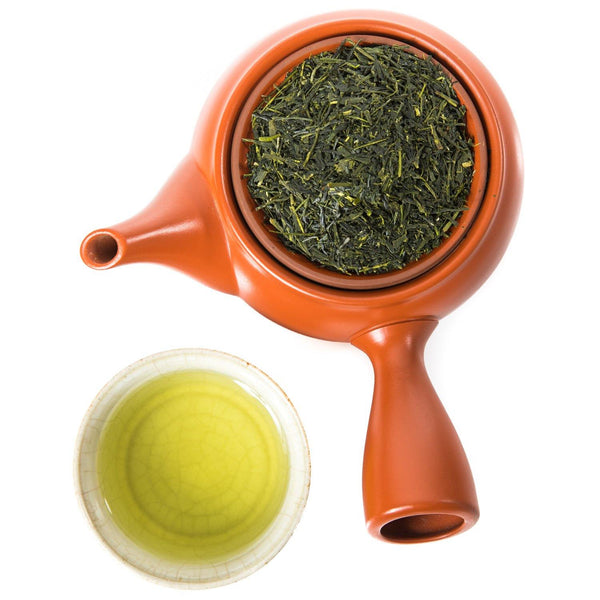
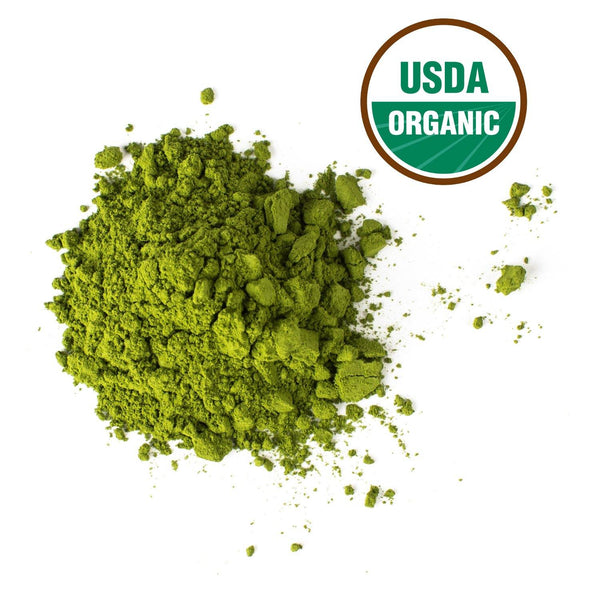
When referring to teas, you might often encounter the term "umami", but what exactly is it? Here, we will try to break down this somewhat mysterious word.
The term umami is originally Japanese; however, nowadays it is so well known to the Western world that it is not rare to find it used on product labels, menus, food articles, and the like. It is also not uncommon to encounter this word in the tea-drinking community, with Japanese teas in particular having a high level of umami.
What is Umami?
Umami is known to be the fifth taste, joining sweet, sour, salty and bitter. It is a primary, or basic taste.

Umami was first discovered by Japanese chemist Kikunae Ikeda in 1908, who first extracted monosodium glutamate from kelp. Nowadays, the umami seasoning Ajinomoto is used daily in Japanese cooking and is found in most households throughout Japan and even abroad.
To define things more technically, the term umami is used mainly for substances that combine the amino acid glutamate with the nucleotides inosinate and guanylate.
Some of the biggest sources of umami include soy sauce, seaweed, mushrooms, sardines and bonito, tomatoes, and aged cheeses like Parmesan.
The Synergy Effect – Why Umami Compounds Multiply
One of the most remarkable properties of umami is synergy. When glutamate is combined with the nucleotides inosinate (IMP) or guanylate (GMP), the perceived umami intensity multiplies dramatically – far beyond what either compound produces alone. This is why dashi – the Japanese stock made from kombu (glutamate) and bonito flakes (inosinate) – tastes so savory.
In tea, this same principle explains why Gyokuro and Matcha – both rich in glutamate and theanine – produce such an intensely satisfying, lingering savory quality in the cup. The combination of umami compounds creates that distinctive coating sensation on the palate.
How Can We Taste Umami?
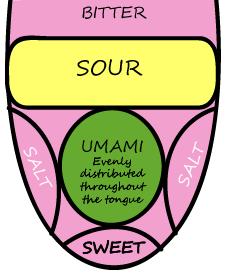
Umami is a taste that spreads across the tongue, coating it completely. Lingering. Bringing a mouthwatering sensation. A pleasant savory taste.
Green tea is rich in glutamate, an amino acid that produces a satisfying, savory umami taste. Anyone who has tried green tea will perhaps have sensed varying levels of sweetness, umami, astringency, and bitterness. The sweet and full-bodied character results primarily from L-theanine and glutamate – both amino acids that contribute to umami and sweetness – while astringency comes from catechins and bitterness from caffeine.
Which Teas Contain The Most Umami?
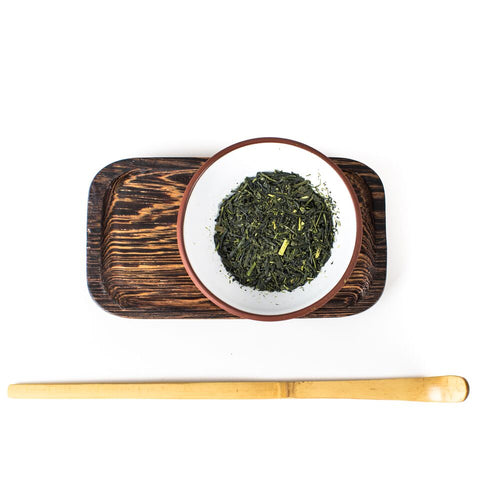
Teas with the highest umami tend to be those made from young, early-season leaves, picked before the plant has had extensive sun exposure, and shade-grown teas like Gyokuro and Matcha, where deliberate shading for several weeks before harvest causes the plant to accumulate higher levels of L-theanine and glutamate. On the other hand, teas like Hojicha (made mainly from stalks and twigs) contain less umami.
Of course, this is not to say that teas with lower umami are inferior. It all depends on the occasion. When drinking tea on its own or before a meal, one might prefer something with richer umami; lower-umami teas are perfect after meals because of their mellow, refreshing qualities.
How to Brew Tea to Maximize Umami
Brewing temperature directly affects how much umami you taste in your cup. Umami compounds, particularly L-theanine and glutamate, are highly soluble and extract readily even at low temperatures. Bitter compounds (e.g., caffeine) and astringent compounds (e.g., catechins), on the other hand, extract more aggressively at higher temperatures.
This is why Gyokuro is traditionally brewed at very low temperatures – around 50–60°C (120–140°F). At this temperature, umami extracts cleanly while bitterness and astringency remain largely in the leaf, allowing the savory sweetness to dominate the cup. Matcha, prepared with water around 70–75°C (160–165°F) and whisked rather than steeped, achieves a similar balance.
For first flush Japanese greens like Shincha or high-grade Sencha, brewing at 60–70°C (140–160°F) will bring out more of the umami character while keeping bitterness in check.
How to Brew Gyokuro Tea: