Yellow Teas

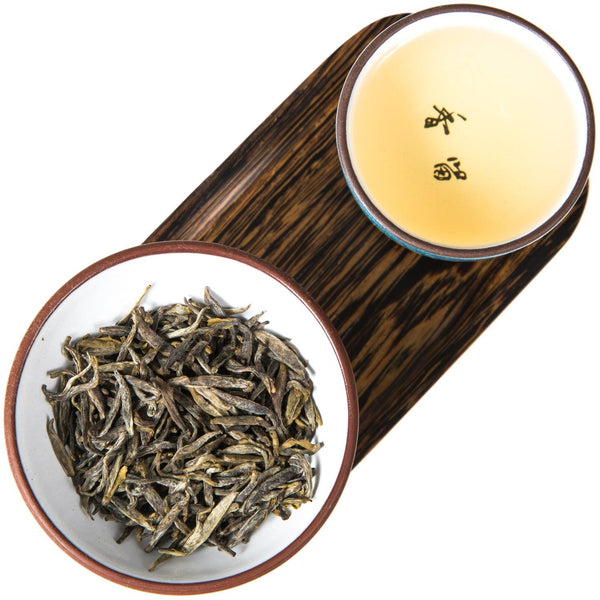
• Flavor: chestnut. long sweet finish • Aroma: apricot & honey • Mouthfeel: smooth & refreshing


• Flavor: chestnut with soy milk finish • Aroma: nutty, slightly floral • Mouthfeel: brisk & silky


• Flavor: chestnuts & quince • Aroma: roasted chestnuts • Mouthfeel: creamy & tingly


• Flavor: cacao with fruity notes • Aroma: roasted, cacao with milk • Mouthfeel: soft & rounded Low caffeine


• Flavor: cocoa nibs & grains • Aroma: cocoa & chestnuts • Mouthfeel: light & smooth

Tea Club is a perfect way to stay excited by tasting various teas and discovering new favorites. We'll introduce you to what we find worth your attention, including our new arrivals. Become a member of our Tea Club, and your cup will never be half-empty!

• For a $250 card pay only $210 !
• For a $500 card, pay only $400 !
And, besides the savings, if you are looking for the ideal tea or teaware gift but finding the multitude of options a bit overwhelming, this Gift Card will help to make it simple!
About Yellow Teas [+]
Yellow tea – Huang Cha (黄茶) – is the rarest of China's six tea categories, accounting for significantly less than 1% of the Chinese tea market. It is similar to green tea in its early processing steps, but distinguished by one additional stage unique to yellow tea: Men Huang (闷黄 – Stewing Yellow), a controlled stewing process that transforms the fresh leaf into something softer, rounder, and more mellow – removing the grassiness of green tea while preserving its freshness and clean character.
What Does Yellow Tea Taste Like?
The hallmark of Huang Cha is its mellow, sweet, and comforting character. Notes of roasted chestnuts, cacao, and dried apricots are common, depending on the grade and origin. The taste is smoother and less grassy than green tea, gentler on the stomach, with a soft, lingering sweetness and none of green tea's sharp astringency. Higher-grade yellow teas, like Huo Shan Huang Ya, are more delicate, with a pale liquor and a subtle floral sweetness. Lower-grade versions, made from larger leaves and stems, like Huang Da Cha, are bolder, roastier, and warmer in character.
One of yellow tea's most distinctive features is its visual beauty in the cup: the buds float upright and slowly sink and rise during brewing – what tea enthusiasts call "dancing tea." This is best appreciated in a tall glass or glass gaiwan.
What Is Yellow Tea And Why Is It So Rare?
In ancient China, yellow was the color of the emperor. The term Huang Cha was historically used to refer to tribute teas offered to the imperial court – not teas processed in the yellow tea style as we know it today. The specific Men Huang technique that defines modern yellow tea evolved during the early Qing dynasty (17th century) as tea masters refined green tea processing.
Since the 1990s, the surge in green tea's popularity has led many producers who had mastered Men Huang to switch to the more profitable green tea production. Today, only a small number of tea masters still practice the full yellow tea process. As a result, it became an exceptionally rare category that is both historically significant and increasingly difficult to find.
Yellow Tea Processing – What Makes It Different
Yellow tea begins like green tea: fresh leaves are pan-fired (Sha Qing – 杀青 – Kill Green) to halt enzymatic oxidation, then shaped and partially dried. What follows is the step that makes yellow tea unique:
Men Huang (闷黄 – Stewing Yellow) – the tea master wraps the warm, damp leaves in small batches in linen or paper, or covers them in bamboo baskets, and places them in a controlled hot environment for anywhere from a few hours to several days. The residual moisture inside the leaves begins to stew under the heat, triggering slow non-enzymatic oxidation – yellowing the leaves, softening the taste, and developing the characteristic mellow sweetness of Huang Cha. The final step is a slow charcoal drying, which locks in the aroma and adds warmth to the flavor.
Men Huang is simultaneously the most important and the most difficult step in yellow tea production. There are no strict guidelines – it is an intuitive, manual process requiring total control over heat and humidity. Only one tea master can oversee a single batch; if another takes over mid-process, the result will be a different tea. That level of individual mastery is precisely why yellow tea is so rare.
Yellow Tea in Our Collection
• Huo Shan Huang Ya (霍山黄芽 – Yellow Buds from Huo Mountain) One of the most celebrated styles. Grown in Taiyang Village, Huoshan, Anhui province, at an altitude of 800m. One bud with one or two leaves; Strong chestnut flavor, clean and sweet, round and mellow. The benchmark for what yellow tea should taste like.
• Meng Ding Huang Ya (蒙顶黄芽 – Yellow Buds from Meng Ding Mountain) A more rare and boutique yellow tea from Mengding Mountain, Ya'an, Sichuan province, at 1000m altitude. Made from single buds of the ancient local Lao Chuan Cha (老川茶) cultivar, hand-picked and hand-processed in small batches by tea master Yao. Rich and delicate: mellow, velvety, with notes of dried apricot, cocoa, and honey, and a long sweet finish.
• Huang Xiao Cha (黄小茶 – Small Yellow) A lesser-known Huang Cha style from Foziling Town, Huo Shan, Anhui. Made from one bud and two leaves of the local Qunti Zhong (群体种) cultivar. Sweet and nutty with notes of quince and wildflower honey, a creamy mouthfeel, and a clean, refreshing finish.
• Huang Da Cha (黄大茶 – Big Yellow) The boldest style in the collection – large, mature leaves with stems and stalks from 60+ year-old bushes in Guihua Village, Jinzhai County, Anhui. Where Huang Ya is delicate and bud-focused, Huang Da Cha is earthy and roasty: cacao, milk, freshly baked bread crust, and a rich, fruity warmth that develops across multiple steeps. Naturally low in caffeine due to its large, mature leaves and high stalk content. An excellent choice for those sensitive to caffeine or looking for an evening tea.
• Meng Ding Huang Cha Brick (蒙顶黄茶 – Yellow Tea from Meng Ding) A handmade compressed yellow tea brick from Mengding Mountain, Sichuan – the same region as the Meng Ding Huang Ya, made by the same tea master, processed and pressed into a brick form. A distinctive and practical format for storage and aging.
Yellow Tea Caffeine
Yellow tea's caffeine content varies significantly by grade. High-grade yellow tea, made from young buds, has higher caffeine and L-theanine content and produces smooth, focused energy. Huang Da Cha, made from large, mature leaves and stems, is naturally low in caffeine: mature leaves accumulate less caffeine than young buds and leaves, and stems contain almost none. It is one of the few true teas suited to evening brewing.
How to Brew Yellow Tea
Most yellow teas brew best at 80–85°C (175–185°F) – similar to green tea but slightly more forgiving of higher temperatures. For Huo Shan Huang Ya, brew it “Grandpa style” – use a tall glass or glass gaiwan to watch the buds dance. For Gong Fu Cha (工夫茶), a porcelain gaiwan works well. Yellow tea is more forgiving of over-steeping than green tea and will not become unpleasantly bitter.
Are There “Fake” Yellow Teas?
Generally not. Yellow tea remains a niche category with a small but discerning audience – largely specialists who can immediately distinguish authentic Huang Cha from a green tea sold as yellow. The more common issue is producers simply calling a green tea "yellow" due to the color of the dry leaf. Purchase from a trusted vendor; the Men Huang process is detectable in the taste.
Lately, there is a new trend in Yunnan of calling lower-oxidized black (red) tea "yellow". However, this variation of tea doesn’t undergo the Men Huang processing step and cannot be called “true” yellow.
There is also a Korean tea called Hwangcha (황차), which also translates as "yellow tea." It should not be confused with Chinese Huang Cha. Korean Hwangcha is a lightly oxidized tea with processing closer to oolong or light black tea – the Men Huang step that defines Chinese yellow tea is not used. The flavor profiles are markedly different.