Ceremonial Matcha


• Taste: umami, sweet, nutty • Aroma: nutty • Mouthfeel: creamy, smooth, thick

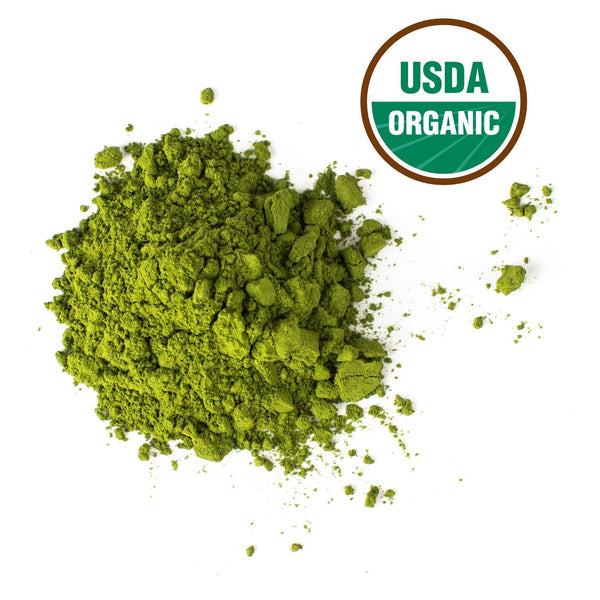
• Taste: umami, sweet, rich vegetal • Aroma: vegetal • Mouthfeel: creamy, smooth, thick
About Matcha [+]
Matcha Green Tea Powder
Matcha is a traditional Japanese green tea powder. Farmers produce this tea using a stone mill to grind the shade-grown green tea leaves into fine tea powder. Matcha is the quintessential part of the Zen-inspired, highly artistic Japanese tea ceremony. The cornerstone of the Japanese tea culture.
The Best Energizing Tea – Matcha!
You probably already know at least one person who gave up coffee in favor of matcha. It is perhaps one of the best substitutes for coffee. Matcha is among the most caffeinated Japanese teas, primarily because it's a powder, so we consume the entire tea leaf when we drink it.
Another factor that raises caffeine levels in matcha tea is the tea farming technique called "shading". Three to four weeks before harvest, the tea bushes get covered to block the direct sunlight. Shading keeps caffeine, theanine, and chlorophyll high and slows the formation of catechins – the polyphenols behind green tea's bitterness.
The caffeine content of matcha is about 35-70 mg of caffeine per serving – approximately half to three-quarters of the caffeine in a standard cup of coffee. However, thanks to the L-theanine present in tea, the effect of Japanese teas is much smoother than that of coffee. We become focused, creative, and well-energized without getting caffeine crashes or jitters. Indeed, Japanese green tea powder is an excellent energizing tea!
Traditional Japanese tea set
Like the Chinese tea ceremony, Gong Fu Cha, the utensils that tea masters use for chanoyu (the Japanese tea ceremony), are an integral part of the ceremony itself.
Having these items alone, we can easily make Japanese matcha green tea for ourselves at home or anywhere we go.
-
Chawan – a chawan is a Japanese tea bowl that we use to make and drink matcha from. Compared to the traditional Gong Fu teacups, a chawan is quite large and wide. This way, we can ensure there is enough space to whisk the tea powder properly.
-
Chashaku – a narrow, long bamboo scoop used to transfer the tea powder into the chawan. Craftsmen most often make them from bamboo, though some are made from wood or ivory. It is not uncommon for tea masters to carve their own chashaku.
-
Chasen – a bamboo whisk that we use for whisking the tea powder. Craftsmen always carve it from a single piece of bamboo, and it commonly has 80, 100, or 120 tines. Tea masters use different styles of chasen depending on the matcha that they will prepare and the occasion of the tea ceremony.
-
Kusenaoshi – a ceramic holder to hold the wet chasen after use.
How To Make Matcha Tea
To make matcha in the traditional fashion, you will need a few essential tea tools – a chawan, chasen, chashaku, tea sift, and of course, matcha powder.
Next, follow these steps to make a perfect frothy matcha green tea:
-
Boil some water and pour it into the Japanese tea bowl to 'wake it up'.
-
Soften the tines of the bamboo tea whisk by soaking it in some warm water. This brief soak will increase flexibility for a perfectly whisked tea.
-
Dry the chawan, sift the green tea powder through a furui (fine-mesh strainer) into the tea bowl (making sure not to push the tea through). We recommend using 3 chashaku scoops (1 scoop = 1 gram of matcha) for 100ml of water.
-
Grab your chasen, pour in hot water of about 175ºF / 80ºC, and begin to whisk. The whisking should go in the following order: horizontal whisking, vertical whisking, zig-zag whisking. The motions should be swift yet delicate, making sure to keep the chasen tips just under the surface of the tea and away from the bottom of the bowl. The whole process will take between 10 and 20 seconds when the froth begins to form at the top of the tea.
-
Remove the whisk, clean it, and dry it immediately. Ideally, one should use a kusenaoshi (tea whisk holder) where the chasen can sit upright and air dry completely.
-
Finally, pick up the chawan with both hands. Admire the shape, glaze, and feel of the bowl. Enjoy the tea mindfully.
Culinary vs Ceremonial Grade Matcha
The term "Ceremonial grade" is used for matcha made from the youngest, most tender first-harvest tencha leaves, meant to be whisked with water alone; culinary matcha, matcha meant for making lattes, usually comes from later harvests and tastes stronger and more astringent.
It is important to note that culinary or regular matcha is not inferior or low-quality. If purchased from a trusted vendor, this green tea powder will be nearly as good as the ceremonial grade one. It should have a vibrant green color and a refreshing, slightly sweet taste with balanced umami.
Most tea enthusiasts will use standard (non-ceremonial) matcha for everything from cooking to matcha lattes and straight matcha tea. On the other hand, they reserve the ceremonial grade one for a more mindful tea ritual.
Japanese Tea Ceremony – Chanoyu
The traditional Japanese tea ceremony is called Chanoyu (茶の湯 – Hot Water for Tea) or Chado (茶道 – The Way of Tea). A simpler gathering with sweets and tea is a chakai (茶会 – Tea Gathering); a full formal gathering with a kaiseki (懐石 – Tea Ceremony Meal), lasting several hours, is a chaji (茶事 – Formal Tea Event).
Sen no Rikyu (1522–1591) perfected wabicha – tea built on wabi, the beauty of simplicity and restraint – in the 16th century, building on Murata Juko in the 15th century and Takeno Joo after him. Before wabicha, elite tea gatherings were often lavish, centered on costly imported Chinese tea bowls and utensils.
What Is Koicha?
Whether you know it or not, you are most likely already familiar with usucha. Usucha means thin tea, and we use it to refer to the usual matcha tea. This is the one that you've probably already tried before, whether in a cafe, at home, or at a traditional Japanese tea ceremony.
On the other hand, tea masters prepare koicha exclusively at traditional Japanese tea ceremonies. Koicha is a thick tea. More precisely, very thick tea! It uses about twice as much matcha as usucha and far less water, and it is kneaded rather than whisked into a smooth, glossy, syrup-like tea.
To prepare koicha, tea masters must exclusively use top-grade ceremonial matcha. Guests eat omogashi – moist wagashi sweets – before the koicha is served, so their sweetness balances the tea's intensity.
Does Matcha Go Bad? – Japanese Green Tea Powder
All teas eventually go stale. The thing is, Japanese green teas go stale the fastest of them all. Japanese green tea powder is no exception. You can drink it within a year without sacrificing taste or aroma. After that, the tea won't be spoiled. However, it will start losing its fresh taste and aroma.
We recommend storing Japanese green tea powder in a container that is:
- airtight
- odor-free
- not clear or made out of see-through glass
- perfect for the amount of tea (to avoid any extra space and air)
- clean
High temperature, humidity, and sunlight may make the tea powder lose its freshness. That's why we suggest keeping your unopened matcha powder in the fridge. When unopened and kept in the refrigerator, it will stay fresh for about a year. After opening, place it in a cool, dark place outside of the fridge.
When taking a new batch of tea out of the fridge, it is best to allow it to get back to average room temperature before opening to avoid condensation.
The top three rules for keeping your Japanese green tea powder fresh, vibrant, and full of umami are:
-
Refrigerate unopened matcha until ready to consume (up to 1 year)
-
Keep it away from heat, odors, light, and moisture; in an airtight container
-
Enjoy within three months after opening
Why Is Matcha Expensive?
The main reason matcha is expensive is that producing a quality stonemill matcha powder is an immensely tedious and laborious process requiring particular skill and knowledge.
Other things come into play: producers need to shade the tea bushes, remove the stems and veins from the tencha leaves, and grind them slowly on granite mills – one mill produces only about 40 g of matcha per hour. Furthermore, the popularity of matcha and the high demand for it also play a role.
An essential thing to note when comparing the price of matcha to other tea types is that while the cost of matcha is more expensive per gram, we also use much less of it per cup.